
Life After Stroke: Rehabilitation and Stroke Recovery
Life After Stroke: Rehabilitation and Stroke Recovery. Understand life after stroke. Learn about rehabilitation and therapies when a stroke happens.
Read MoreRecovery after a brain injury can feel overwhelming. Learn how occupational therapy helps patients regain independence, rebuild daily skills, and improve quality of life.
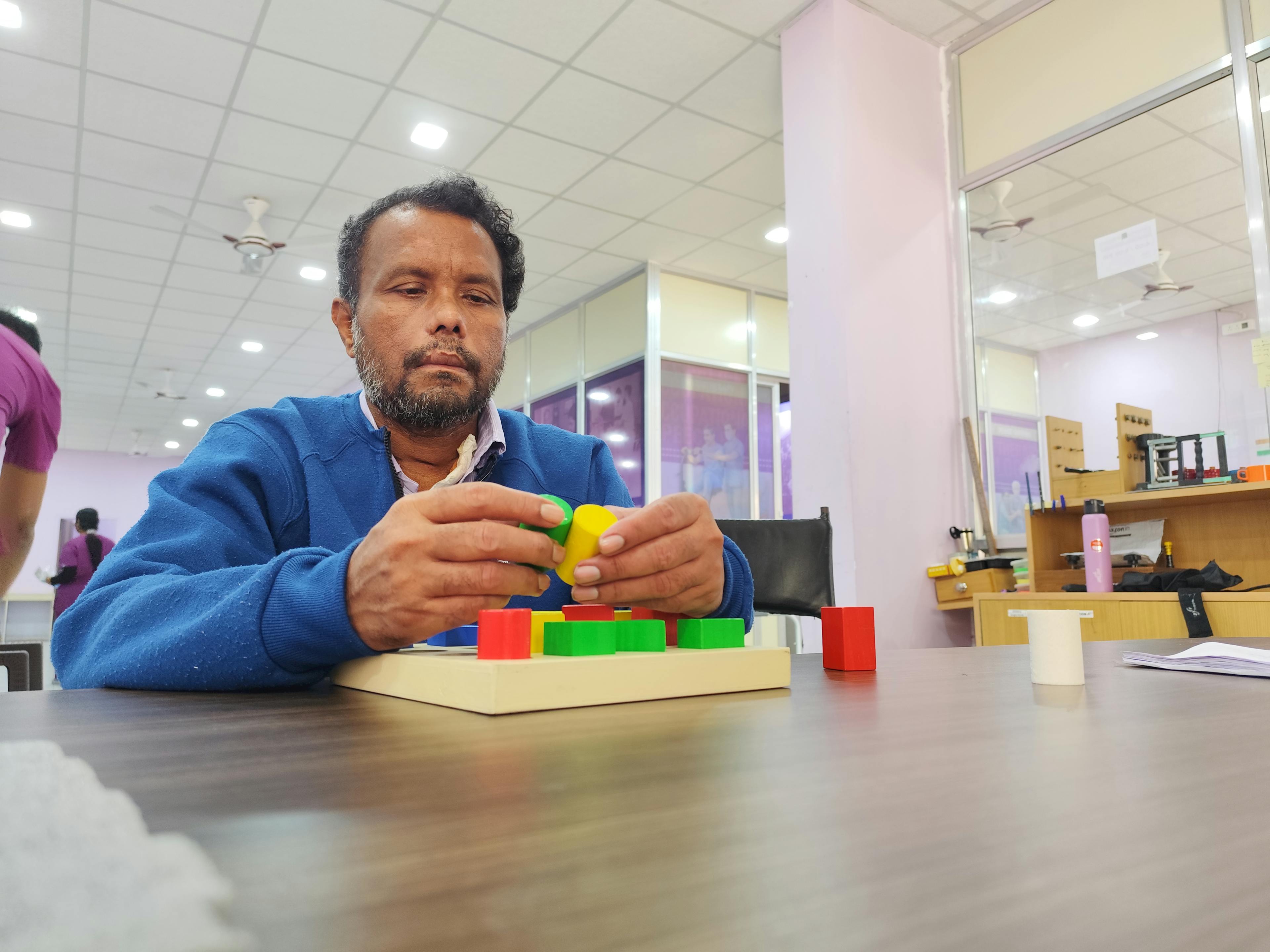
When a brain injury happens, nobody is prepared for what comes next. Not the patient. Not the family. Not even sometimes the doctors who’ve seen it many times before. Because no two brain injuries behave the same way.
One moment, life is moving along normally. And then suddenly, everything slows down. Or feels confusing. Or feels unfamiliar.
We meet families at this point all the time at our neuro rehabilitation centre in Kolkata. And the first thing they usually say is not a medical question. It’s something like,
“Why is he so different now?”
or
“She looks fine… but she isn’t the same.”
This is where occupational Therapy in Kolkata quietly becomes important.
Not loudly. Not dramatically.
Just… steadily.
When people hear the words brain injuries, they often think about accidents, falls, or trauma. And yes, traumatic brain injuries (TBI) are common – road accidents, head injuries, sudden impact.
But there are also acquired brain injuries – after stroke, infections, lack of oxygen, bleeding in the brain.
No matter the cause, what matters is this:
there has been damage to the brain, and that affects how the person functions day to day.
And “function” doesn’t just mean walking.
It means:
Many brain injury patients tell us, “My body works, but my head doesn’t cooperate.”
That’s a very real experience.
These are the different types of brain injuries and their impact on daily functioning – affecting thinking, behaviour, communication, emotions, and independence, often in ways that are not immediately visible but deeply felt in everyday life.
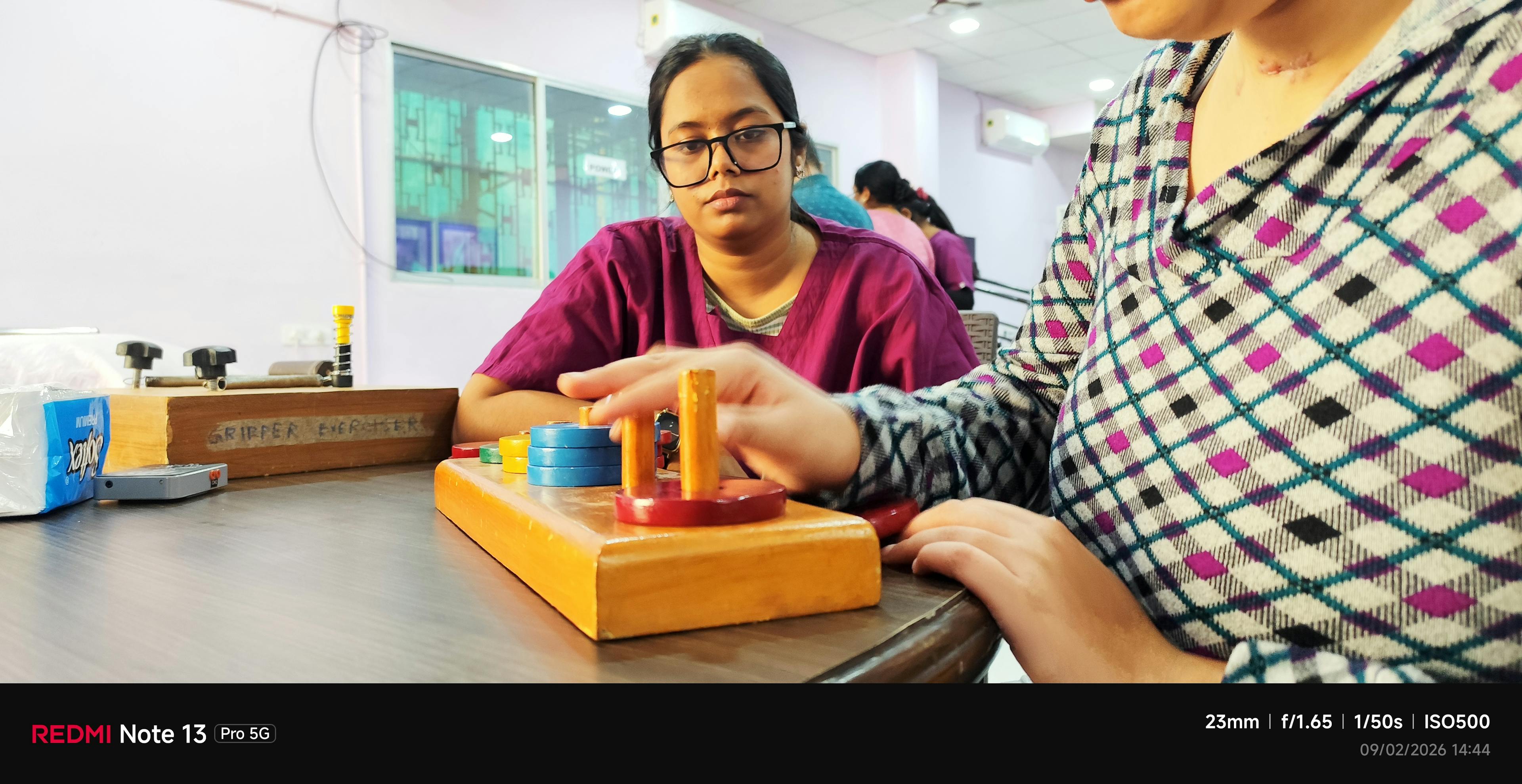
People often ask us, “So what does an occupational therapist do exactly?”
Let me explain it the way we explain it to families.
Occupational therapy (OT) helps people do the things they need to do every day – and the things they want to do – after illness or injury.
An occupational therapist doesn’t focus only on muscles or only on the brain. We look at how everything comes together in real life.
We look at:
Because real life is not divided into departments. Neither is recovery.
This is what occupational therapy focuses on: helping people regain independence, adapt to challenges, rebuild skills, and participate meaningfully in everyday life – at home, at work, and in the community.
Read more: Occupational Therapy: What It Is & how Occupational Therapist Improves Life
Here’s something we’ve learned over the years.
You can be medically stable and still not be okay.
You can finish hospital treatment and still not know how to manage your day.
That’s why the essential role of occupational therapy is not just recovery – it’s relearning how to live.
In fact, the role of occupational therapy in brain injury rehabilitation is to bridge the gap between medical recovery and real life. It focuses on helping the brain and body work together again in everyday situations, including the treatment of traumatic brain injury (TBI) – where challenges often go beyond visible physical injuries.
Occupational therapy helps individuals:
Slowly. Gently. Repeatedly.
Know more: Different Types of Traumatic Brain Injury (TBI) and Recovery Tips
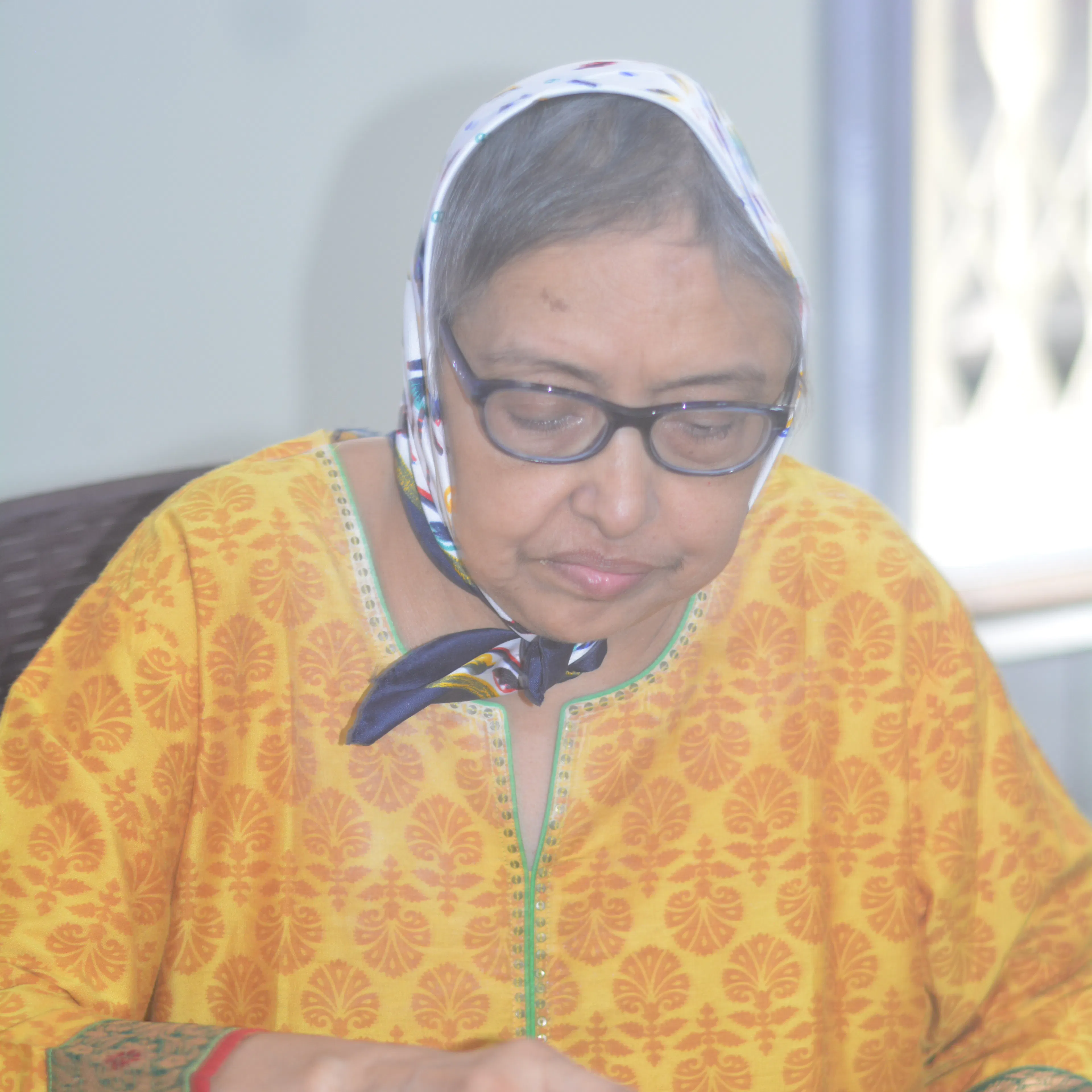
We almost always begin with the basics.
Not because they’re simple – but because they matter.
Brushing teeth. Eating. Dressing. Using the bathroom safely.
After a brain injury, these daily tasks can suddenly feel exhausting. The body may move, but the brain struggles to plan the steps.
Occupational therapy helps break these activities down. We practice them. We adapt them. Sometimes we do the same thing again and again.
And when a patient completes a task on their own after weeks of effort – that moment matters more than any report.
This is the part families struggle to understand at first.
Why does he forget things he knew yesterday?
Why does she lose track halfway through a task?
Brain injuries affect cognitive function – memory, attention, planning, and problem-solving.
Occupational therapists use:
Not complicated games. Real things. The kinds of thinking needed to manage everyday life.
Progress here is quiet. But it’s powerful.
Everyone wants independence. Patients want it. Families want it.
But independence after brain injury has to be built carefully.
We help patients:
This is how patients regain independence – not by rushing, but by learning what works now.
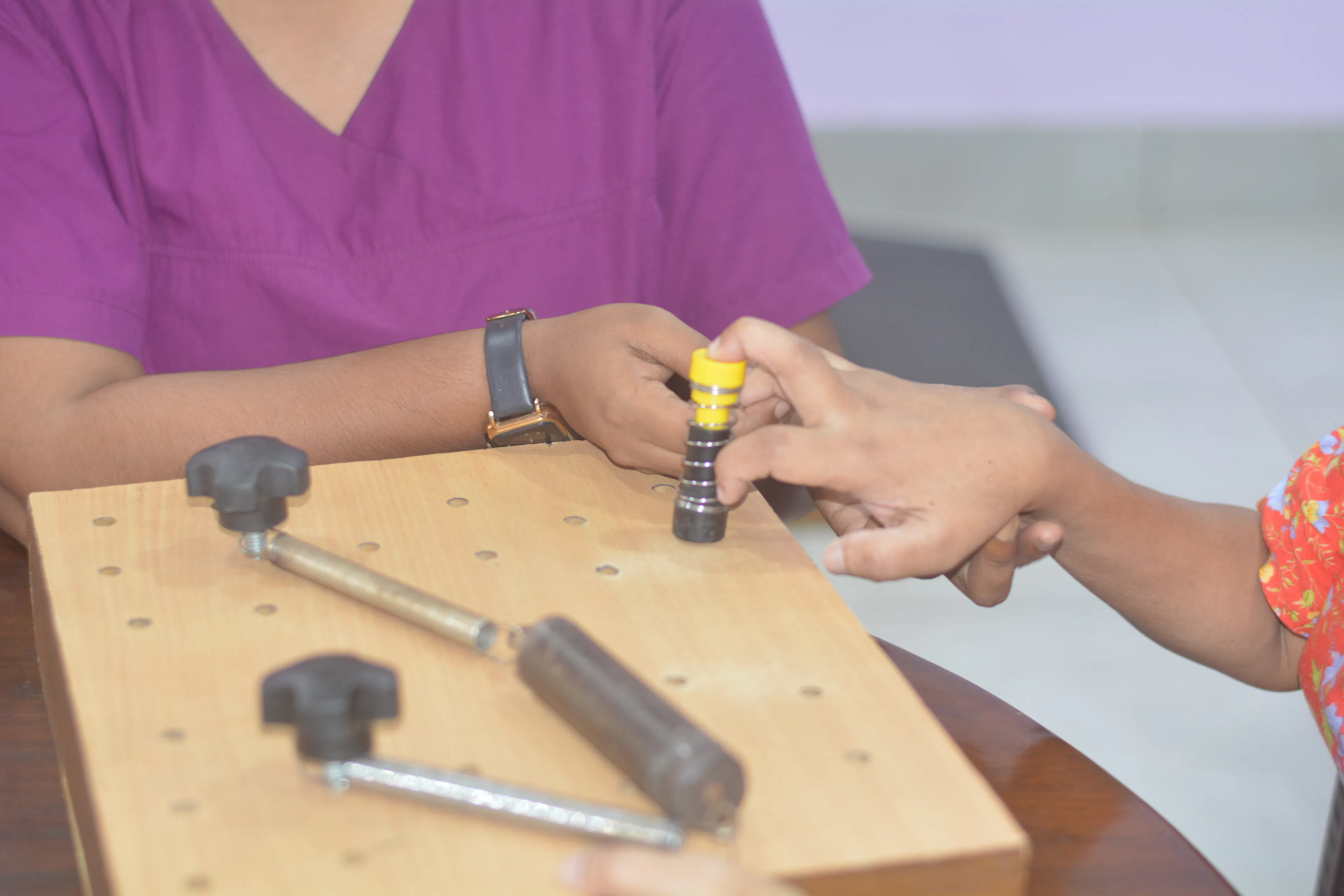
Occupational therapy is not the same as physical therapy, but we work closely together.
While physical therapy may focus on strength and walking, OT looks at how movement is used during daily life.
We work on:
The goal is not exercise for exercise’s sake.
The goal is function.
Know more: Difference Between Occupational Therapy Vs Physiotherapy: Which Is Better?
Brain injury often changes how a person reacts to noise, light, touch, and emotions.
Some become overwhelmed easily.
Some withdraw.
Some become irritable or frustrated.
Through sensory stimulation, calming strategies, and gentle routines, occupational therapy supports emotional regulation.
This part of therapy often helps caregivers just as much as patients.
For individuals with TBI, recovery can feel unpredictable.
Good days. Bad days. Confusing days.
Occupational therapy can help TBI patients:
Recovery doesn’t mean going back to how things were before.
It means finding a new rhythm that works.
This is what it really comes down to.
Quality of life.
Occupational therapy helps people:
We’ve seen patients smile again not because they walked farther – but because they cooked a simple meal, or managed a task on their own.
That matters.
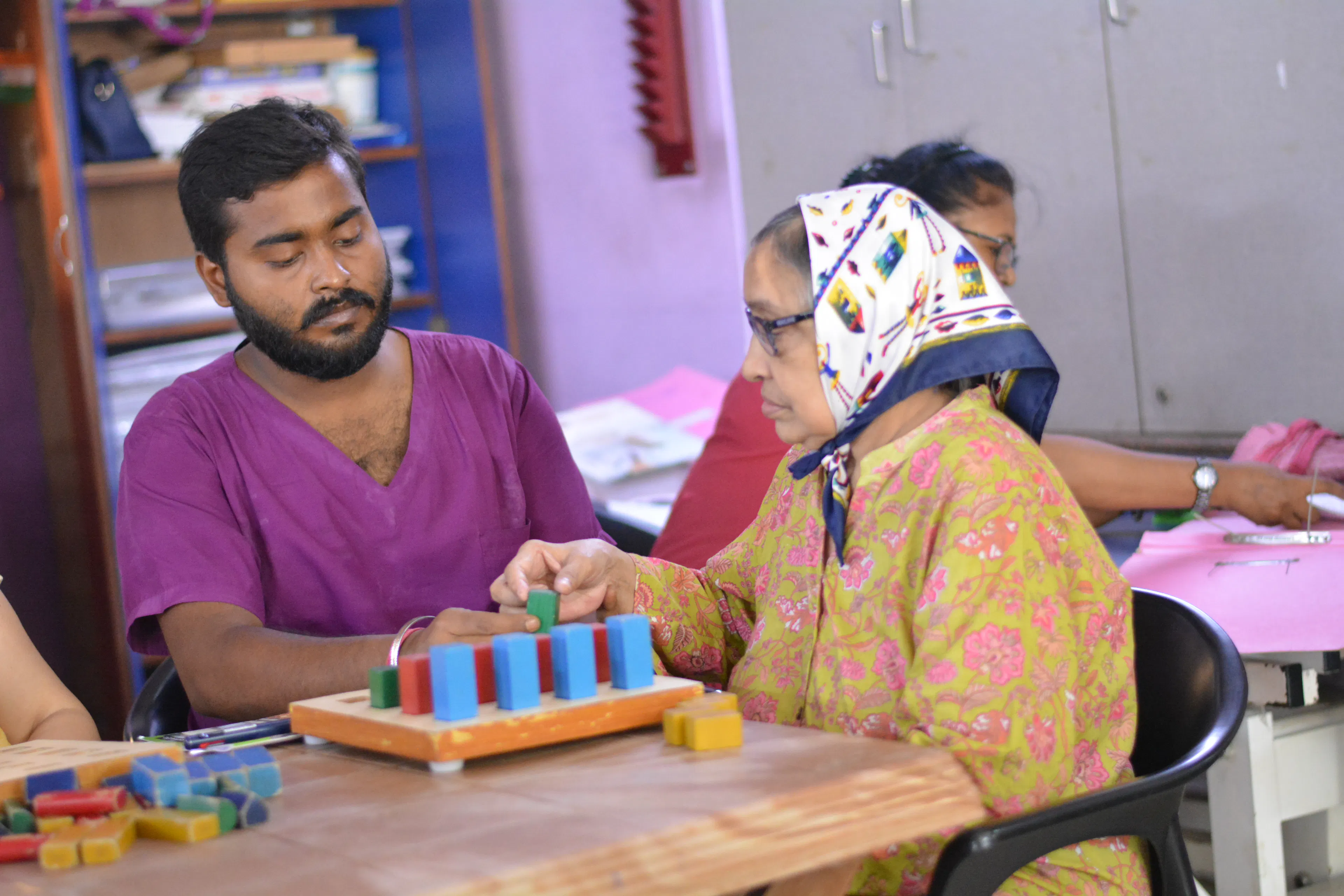
Caregivers carry a lot. More than they usually admit.
Occupational therapists support caregivers by:
Recovery works better when caregivers are supported too.
There is no standard timeline.
That’s why personalized treatment plans are essential.
Each rehabilitation plan considers:
This kind of personalized rehabilitation respects the person – not just the diagnosis.
Occupational therapy is part of a larger rehabilitation process, working alongside:
Together, we help patients rebuild life – not just recover from injury.
Read more: How Speech Therapy Works: A Complete Guide
If you’re reading this as a patient, caregiver, or family member, I want you to know this:
Recovery after brain injury is not neat.
It’s not fast.
And it’s not the same for everyone.
But occupational therapy helps people move forward – one task, one day, one small win at a time.
At Rehabana, we’ve seen individuals regain independence.
We’ve seen caregivers regain hope.
And we’ve learned that healing is not about perfection.
It’s about progress.
And no one should have to figure it out alone – especially at a place many families trust as the best rehab centre in Kolkata.
Knowledge That Guides Recovery
Get expert neuro rehabilitation tips from the doctors at Rehabana, Kolkata — simple guidance on stroke recovery, spinal cord injury rehab, Parkinson’s care, and enhancing quality of life after neurological conditions.
Life After Stroke: Rehabilitation and Stroke Recovery. Understand life after stroke. Learn about rehabilitation and therapies when a stroke happens.
Read More
Paralysis: Understanding the 4 Types of Paralysis. Learn about the different types of paralysis, how it affects the nervous system, and the main types.
Read More
Learn how occupational therapy helps reduce pain through expert occupational therapist care, structured rehabilitation, and support from a skilled therapist.
Read More