Discover how speech therapy helps stroke survivors improve communication, swallowing, confidence, and overall quality of life during stroke recovery and rehabilitation.
When a stroke happens, families often focus first on movement – Will they walk again? Will their arm improve?
But very soon, another worry quietly takes over: speech.
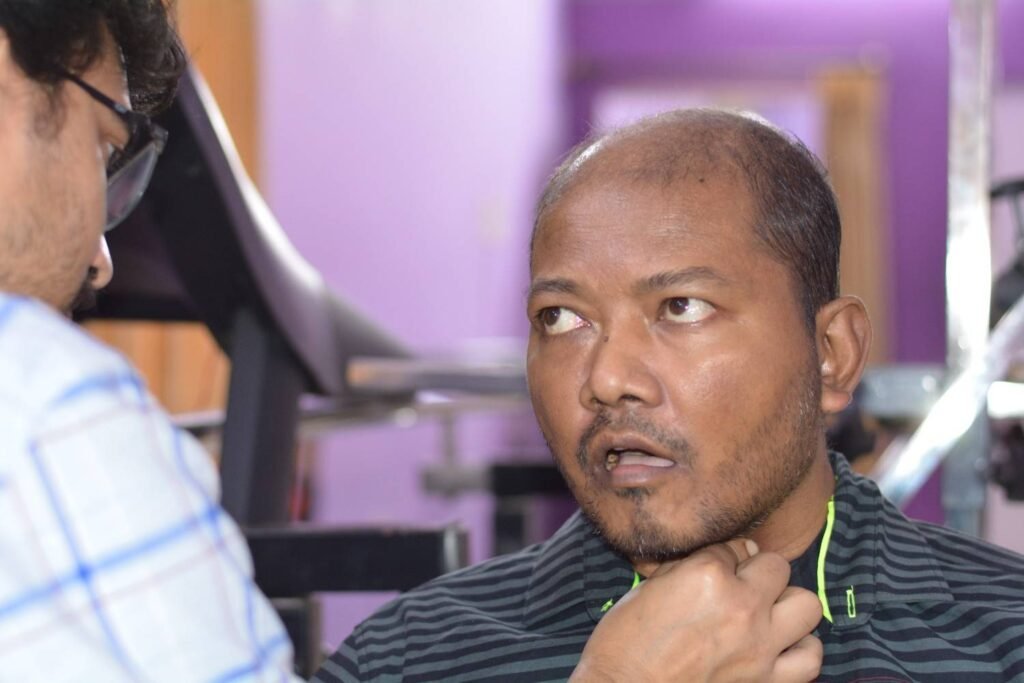
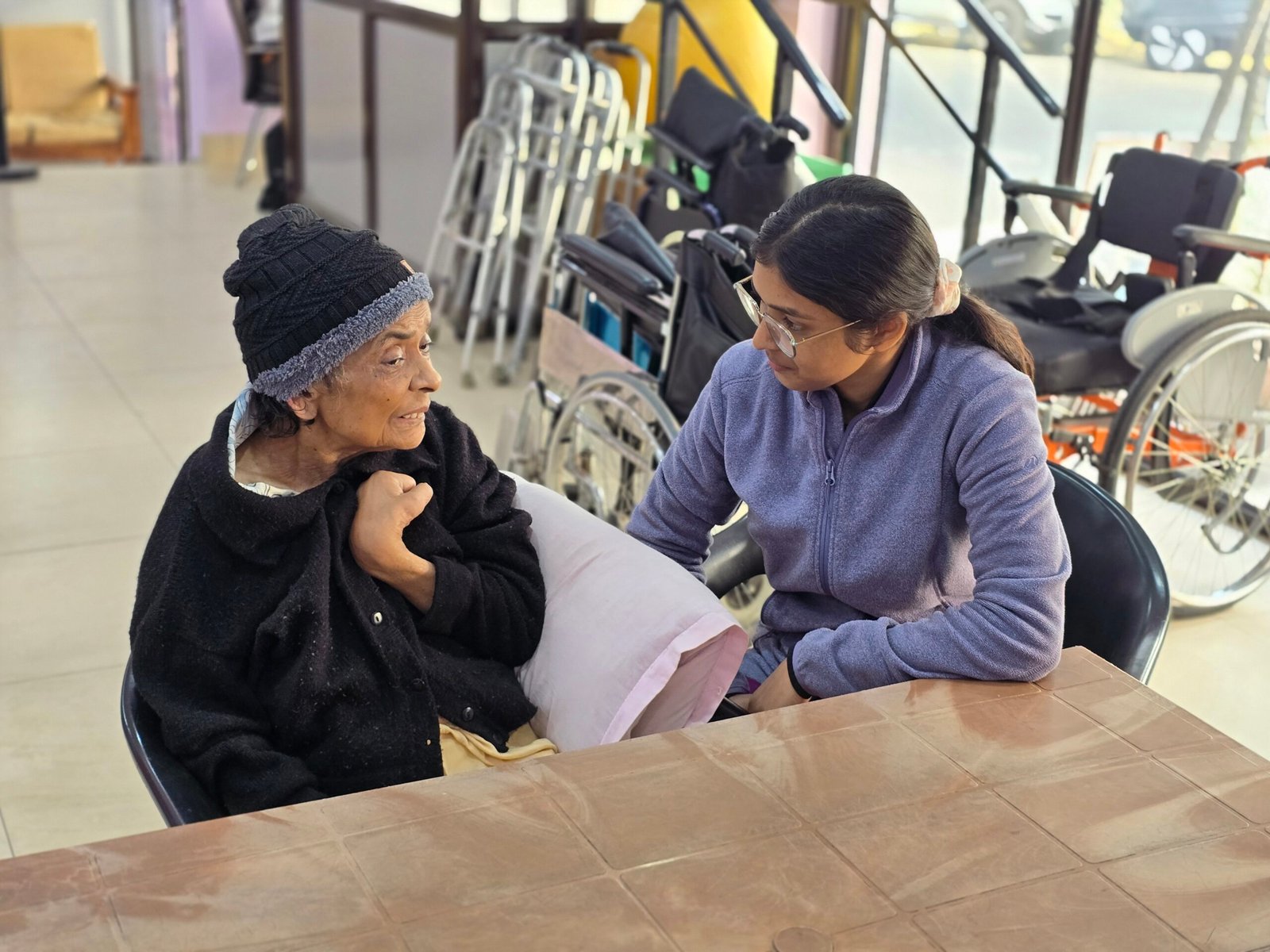
At Rehabana, we sit with stroke patients and their families every week who say the same thing:
“They understand us, but they can’t speak.”
“Their words are slurred.”
“They get frustrated because they know what they want to say, but it won’t come out.”
This is where speech therapy after stroke becomes life-changing – not just for speech, but for dignity, confidence, relationships, and overall quality of life.
Speech therapy in Kolkata is not about “talking better” alone. It is about helping a stroke survivor reconnect with the world – to express needs, share feelings, swallow safely, and feel like themselves again.
Let’s talk honestly about how speech therapy helps after stroke, what really happens in therapy sessions, and why it plays such a critical role in comprehensive stroke rehabilitation at a specialised neuro rehabilitation centre in Kolkata.
Why Speech Is Affected After Stroke
A stroke occurs when blood supply to part of the brain is interrupted. When the brain doesn’t receive enough oxygen and nutrients, brain tissue becomes damaged.
Depending on which areas of the brain are affected, a stroke may cause:
- speech difficulties
- language and speech difficulties
- problems understanding speech
- slurred speech
- difficulty swallowing
This can happen after an ischemic stroke (blocked blood vessel) or a hemorrhagic stroke (bleeding in the brain). Every stroke is different, which is why every stroke recovery journey is unique.
Speech and communication problems can appear immediately or develop during post-stroke recovery, especially in moderate to severe stroke or chronic stroke.
Read more: Speech Therapy: What It Is & How Speech and Language Therapy Works
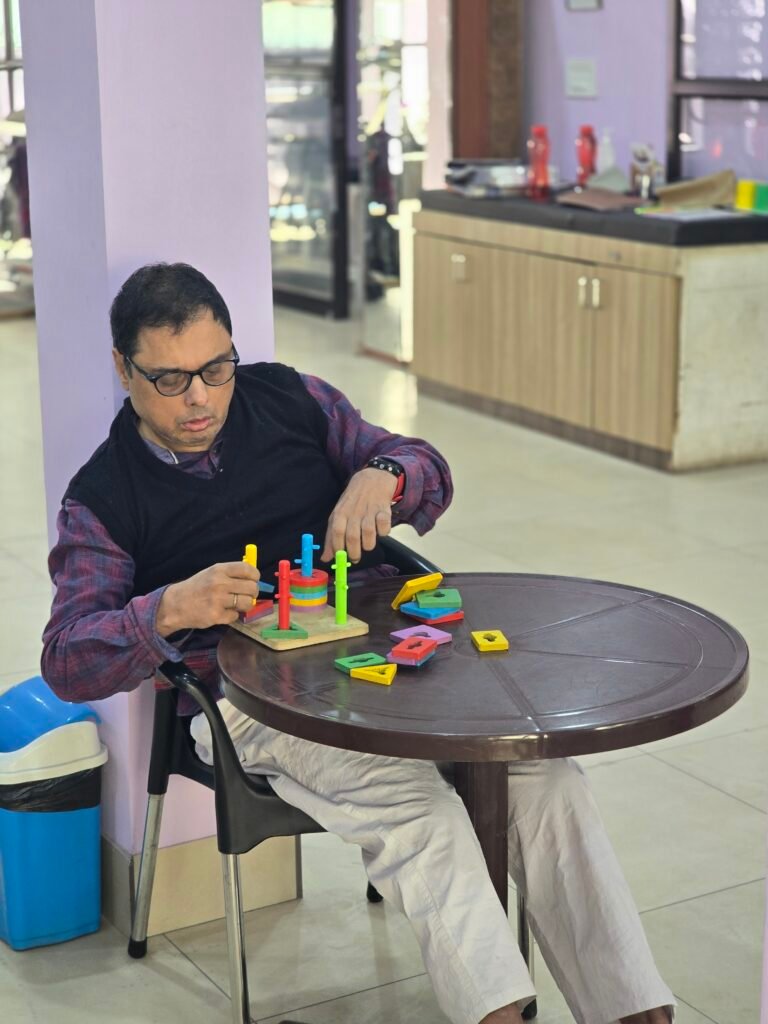
Common Speech and Language Problems After Stroke
From years of working with stroke patients, these are the most common speech challenges we see:
Aphasia After Stroke
Aphasia affects language and speech, not intelligence.
Stroke patients with aphasia may:
- struggle to find words
- have trouble understanding what others say
- speak in short, incomplete sentences
- know what they want to say but can’t express it
Aphasia after stroke can feel deeply isolating – but with structured speech and language therapy, language recovery after stroke is possible. Step by step, patients can relearn how to understand, express, and connect with others, restoring not just words, but confidence and dignity in communication.
Dysarthria (Slurred Speech)
Dysarthria is a motor speech disorder caused by weakness or poor control of the muscles used for speech movements.
Speech may sound:
- slurred
- slow
- quiet
- unclear
With targeted speech therapy exercises, many patients improve clarity and confidence.
Apraxia of Speech
Apraxia of speech happens when the brain struggles to plan speech movements, even though the muscles themselves are strong.
Patients may:
- say the wrong sounds
- struggle to start words
- speak inconsistently
This condition requires structured, repetitive practice with an expert speech-language pathologist. Apraxia of speech after brain injury often improves with targeted motor-speech therapy that retrains the brain to correctly plan and sequence speech movements over time.
Swallowing Difficulties (Dysphagia)
Swallowing problems are common following a stroke and can be dangerous if ignored.
Speech therapy services also address:
- swallowing safety
- food and liquid consistency
- reducing choking risk
- improving nutrition
Yes – speech therapists help with swallow function too. Dysphagia after stroke requires careful assessment and safe swallowing therapy to reduce aspiration risk, prevent pneumonia, and help patients eat and drink more confidently.
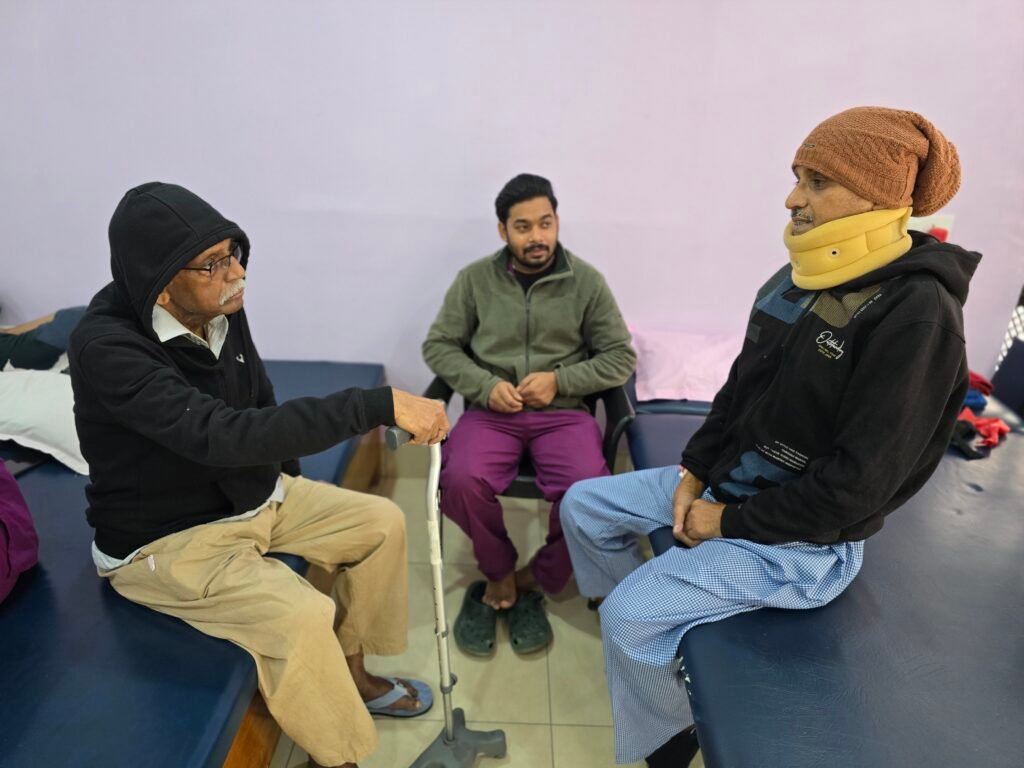
The Role of Speech Therapy in Stroke Recovery
Speech therapy plays a critical role in stroke recovery because communication affects every part of daily life.
The role of speech therapy includes:
- improving speech and language
- restoring communication skills
- supporting emotional well-being
- improving swallowing safety
- rebuilding confidence
At Rehabana, we often say:
When communication improves, quality of life improves.
Speech therapy is not optional care – it is essential rehabilitation.
Know more: Speech Therapy in Kolkata: Addressing Post-Operative Vocal Challenges
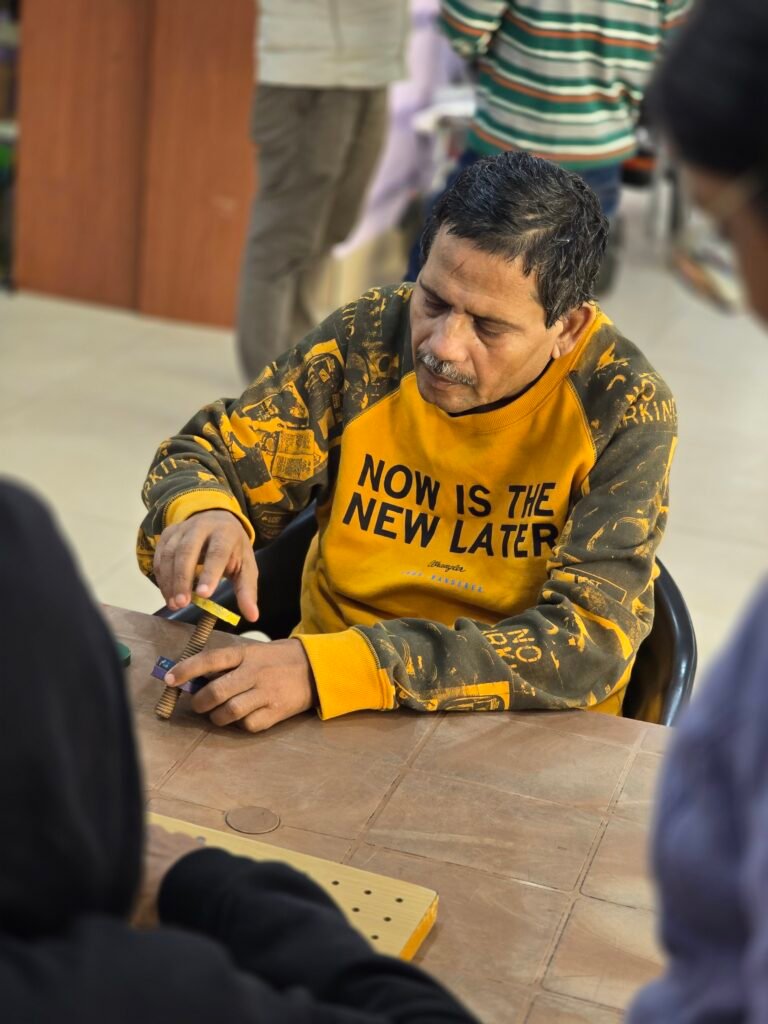
How Speech Therapy After Stroke Actually Works
Families often ask, “What happens in speech therapy sessions?”
Let’s explain it simply.
Individualized Treatment Plan (Tailored to the Patient)
Every patient receives an individualized treatment plan tailored to:
- type of stroke
- part of the brain affected
- severity of speech impairments
- cognitive comprehension level
- personal goals
No two therapy plans are the same.
Structured Therapy Sessions
Speech therapy programs are structured, not random.
Therapy may include:
- word-finding exercises
- comprehension tasks
- sentence formation practice
- speech clarity drills
- breathing and voice therapy
- rhythm and pattern of speech training
- singing therapy (yes, singing helps speech!)
Each session builds gradually, respecting recovery timelines.
Practicing Speech Therapy Exercises
Progress depends heavily on practice.
Speech therapy can help most when:
- exercises are practiced regularly
- family supports practice at home
- frustration is handled with patience
Patients who received consistent therapy often achieve clearer speech and better communication outcomes.
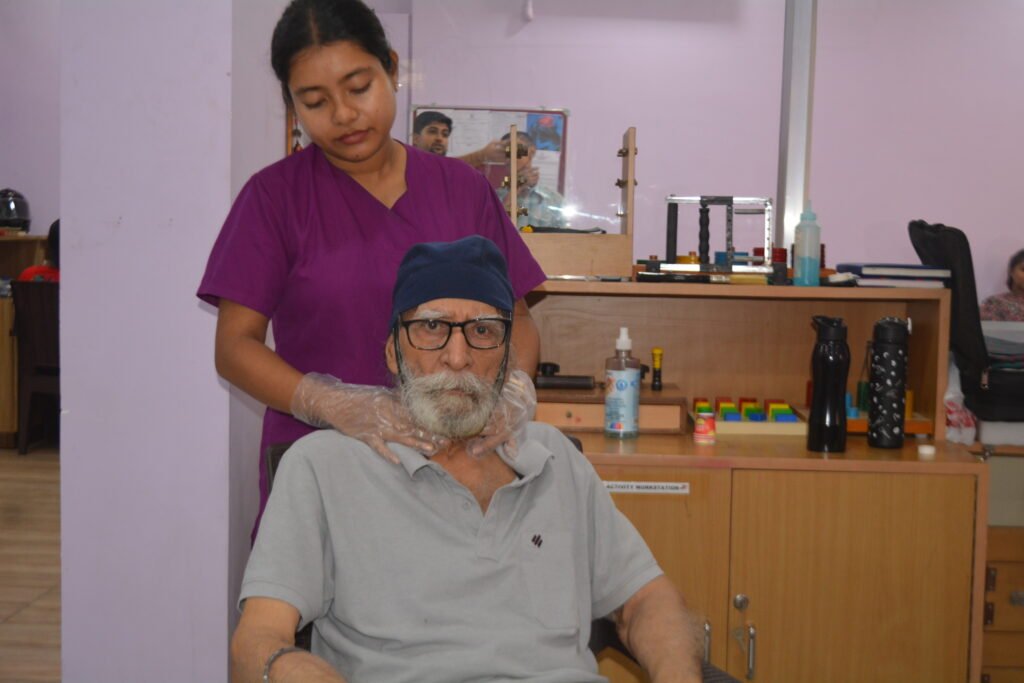
How Speech Therapy Improves Quality of Life
This is the part families feel the most.
1. Restores Communication Skills
Speech therapy helps stroke survivors:
- express needs
- share thoughts
- ask questions
- participate in conversations
Even partial improvement can dramatically improve independence. Structured cognitive communication rehabilitation plays a key role in rebuilding both language and thinking-based communication skills.
2. Reduces Frustration and Emotional Distress
When patients cannot communicate, frustration builds.
Speech therapy improves:
- confidence
- emotional regulation
- social interaction
We’ve seen patients smile again once they can say their child’s name clearly.
3. Improves Swallowing and Nutrition
Safe swallowing improves:
- health
- energy
- comfort
- confidence while eating
This directly impacts overall rehabilitation.
4. Supports Cognitive Recovery
Speech therapy in stroke also supports:
- attention
- memory
- comprehension
- problem-solving
It strengthens the brain’s ability to process language and meaning.
5. Enhances Overall Stroke Rehabilitation Outcomes
Speech therapy works best when combined with:
- physical therapy
- occupational therapy
- medical care
This team-based rehabilitation approach leads to better long-term outcomes.
Speech Therapy for Stroke Patients: When to Start
Early speech therapy is strongly recommended.
In many cases:
- therapy begins in hospital
- continues during stroke rehabilitation
- extends into post-stroke recovery
Even patients months or years after stroke (chronic stroke) can still benefit.
It’s never too late to improve communication.
What Families Should Know
From a senior therapist’s heart, let us say this gently:
- Progress may be slow
- Some days will feel discouraging
- Recovery is not always linear
But we have seen again and again that:
Patients who stay consistent improve their level of communication and language.
Help stroke survivors by:
- being patient
- giving time to respond
- avoiding correcting harshly
- celebrating effort, not perfection
Recommended: Speech Therapy’s Role in Autism: 7 Ways It Enhances Communication in Kolkata
Every Stroke Is Different – But Hope Is Real
Stroke is a medical emergency, and recovery takes time.
Speech therapy does not promise perfection – but it offers possibility.
Speech therapy improves:
- ability to speak
- understanding speech
- social connection
- independence
- quality of life
And that matters deeply.
Conclusion: A Journey, Not a Race
Speech therapy after stroke is not just treatment – it’s a journey back to connection.
For stroke survivors, being able to say:
- “I’m hungry”
- “I love you”
- “I need help”
…is life-changing.
If you or your loved one is facing speech challenges after stroke, know this:
Speech therapy can help. Recovery is possible. And you don’t have to walk this path alone.
Call to Action (CTA)
At Rehabana, we provide expert speech therapy for stroke patients as part of comprehensive stroke rehabilitation.
📞 Call / WhatsApp: 9088746565
📧 Email: rehabana.care@gmail.com
🌐 Website: https://www.rehabana.com/
Rehabana – Neuro Rehab means Rehabana.
Let us help you rediscover communication, confidence, and quality of life – one word at a time.